

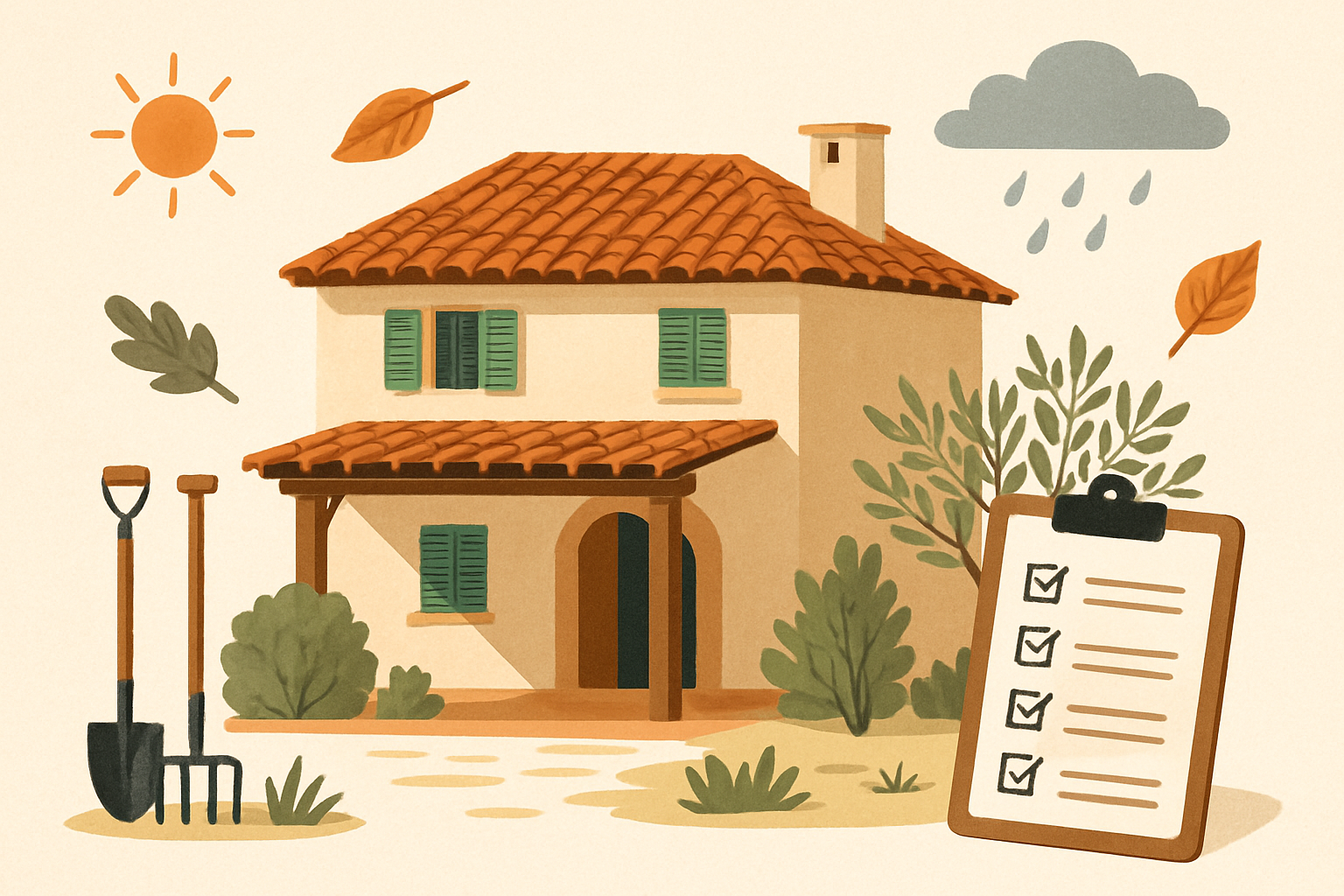
Spanish Property Maintenance: A Seasonal Care Plan That Works
Owning a property in Spain can make everyday life more enjoyable, but a home that is used seasonally or left empty for periods needs a thoughtful maintenance routine. Bright sunshine, high temperatures, occasional heavy rain, coastal air and long periods without occupants can all affect a building in different ways.
The most effective approach is not to wait for a visible problem. Instead, create a simple cycle of inspections, cleaning, testing and preventative work. This helps you protect the condition of the property, reduce unpleasant surprises and make arrivals more comfortable throughout the year.
Start with a property maintenance record
Before creating a schedule, make a record of the home and its main systems. Note the age and condition of the roof, windows, shutters, doors, air-conditioning units, water heater, appliances, pool equipment, irrigation and external walls. Keep photographs of important areas so that you can compare their condition over time.
It is also useful to record the location of stopcocks, electrical switches, fuse boards and water shut-off points. If someone else may visit the property in your absence, leave clear instructions for essential equipment and emergency contacts. European Bricks can be a useful starting point for keeping your wider Spanish property plans organised through its property blog.
Your record does not need to be complicated. A digital folder containing invoices, manuals, guarantees, inspection notes and photographs may be enough. The important point is to make information easy to find when a repair is needed or when you are preparing the property for guests, family or a future sale.
Spring: inspect after the wetter months
Spring is a good time for a thorough inspection, particularly after periods of rain or strong wind. Begin outside and look for cracked render, loose roof tiles, blocked gutters, damaged pointing and signs of water entering around windows or doors. Small marks can be easier to address before they become larger damp or structural concerns.
- Clear leaves, soil and debris from gutters, drains and drainage channels.
- Check terraces and balconies for standing water or damaged grout.
- Inspect external paintwork, render and sealant around openings.
- Look at boundary walls, gates and fences for movement or corrosion.
- Test exterior lights and replace damaged or weathered fittings.
Inside the property, open cupboards and wardrobes to check for musty smells, mould or condensation. Move furniture slightly away from external walls where possible, allowing air to circulate. In rooms that remain closed for long periods, ventilation is often just as important as cleaning.
Summer: manage heat, water and outdoor areas
Summer maintenance is largely about managing heat and making sure outdoor systems are working safely. Air-conditioning units should be cleaned and tested before the hottest part of the year. Filters can collect dust quickly, reducing performance and affecting indoor air quality. If a unit is noisy, leaking or failing to cool properly, arrange a professional assessment rather than allowing the issue to continue.
Shutters, blinds, awnings and pergolas should also be checked. These features help manage solar gain, but moving parts can become stiff and fixings may loosen over time. Clean and lubricate mechanisms according to the manufacturer’s guidance, and look for fabric damage or rust.
Outdoor maintenance deserves a regular place in the calendar. Check irrigation lines for leaks, trim vegetation away from walls and inspect paving for trip hazards. If the property has a swimming pool, keep a written record of cleaning, filtration and equipment checks. Any electrical or mechanical work should be handled by a suitably qualified professional.
For broader ideas about preparing a home for comfortable use, you can explore the European Bricks home page and then consider which improvements are genuinely practical for your property.
Autumn: prepare for absence and changing weather
Autumn is the ideal time to prepare a Spanish property if it will be empty during part of the cooler season. Start by checking windows, doors and locks. Make sure shutters close properly and that keys are clearly labelled. Where appropriate, remove valuables from view and avoid leaving spare keys in obvious locations.
Water management is especially important. If the home will be unoccupied for an extended period, consider whether the main water supply should be turned off. This is a general precaution rather than a universal rule, because the right approach depends on the heating, irrigation, pool and plumbing systems. Ask a qualified local professional if you are unsure.
- Check for dripping taps, running toilets and visible pipework leaks.
- Test the heating or heating-and-cooling system before you need it.
- Inspect roof spaces, utility rooms and under-sink cupboards.
- Clean drains and confirm that rainwater can flow away from the building.
- Arrange a trusted visit if the property will remain empty for several weeks.
A periodic visit should be more than a quick walk-through. The visitor should look for leaks, unusual smells, power failures, storm damage, pest activity and signs that doors or windows have been forced. Ask for dated photographs after each inspection so that you have a basic record of the property’s condition.
Winter: protect the home when it is quiet
Winter care varies according to the property’s location, construction and occupancy pattern. Even in areas with mild winters, damp air, rain and cooler nights can affect a home that is closed up. Air the property when conditions allow, especially after cleaning or periods of heavy rain.
Check that ventilation grilles are not blocked and keep an eye on condensation around windows. If rooms feel persistently damp, investigate the cause rather than simply repainting. Possible causes can include poor ventilation, plumbing leaks, water penetration or inadequate extraction in kitchens and bathrooms.
Outdoor furniture, cushions, tools and decorative items should be cleaned and stored securely. Salt air may accelerate corrosion near the coast, while dust and dry vegetation can accumulate around rural homes. A small amount of regular care can make the next visit far easier.
Use a sensible repair decision process
Not every defect needs to be repaired immediately, but every defect should be recorded and assessed. Separate urgent issues, such as active leaks or electrical faults, from planned work, such as repainting or replacing worn finishes. This makes it easier to budget and prevents minor jobs from becoming forgotten.
When comparing quotations, ask what is included, whether materials and disposal are covered, how long the work is expected to take and what preparation is required. Keep written confirmation of agreed work. For specialist jobs involving electricity, gas, structure, waterproofing or access equipment, use appropriately qualified professionals and seek independent advice where necessary.
If you are reviewing a property purchase or planning future ownership arrangements, the About Us page for European Bricks provides a natural place to learn more about the agency behind this website.
Create a maintenance handover file
A well-organised handover file can be invaluable if a neighbour, caretaker, cleaner or contractor needs to help. Include access instructions, appliance manuals, service records, alarm information, emergency contacts and a short list of regular tasks. Avoid sharing sensitive information casually, and review access arrangements whenever someone’s role changes.
Finally, keep your maintenance plan realistic. A short monthly check, a deeper seasonal inspection and prompt attention to warning signs will usually be more useful than an ambitious list that is difficult to follow. If you need to discuss a Spanish property matter with the agency, you can contact European Bricks directly.
Good property maintenance is ultimately about prevention. By understanding how the home is used, planning around the seasons and keeping reliable records, you can protect the building while making Spanish homeownership calmer, more comfortable and easier to manage.